

By Dr Daniel Andrew, Department Practical and Missional Theology, UFS
Dr Daniël Andrew, Department Practical and Missional Theology, is a member of the Commission of Faith and Order of the World Council of Churches since 2024. He is also one of five members that represent the World Pentecostal Fellowship on the Commission, and the Africa region.
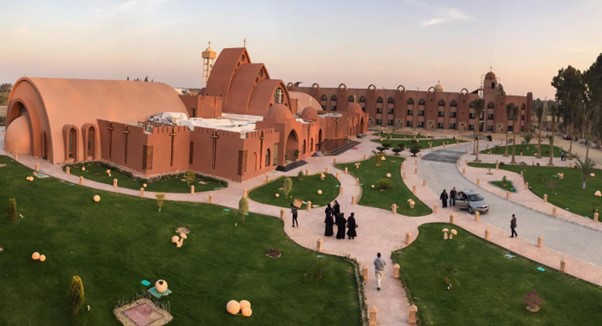
On the 24-28 October 2025 the Commission on Faith and Order (F&O) will hold its Sixth World Conference at the ancient St Bishoy Monastery at Wadi El Natrun near Alexandria, in Egypt with the theme Nicaea, “Where now for Visible Unity?”. The Coptic Orthodox Church will be the host, and the See of Alexandria is historically significant to early Christianity, especially with their earlier debates that led to the Council of Nicaea, now Iznik in Turkey. It will be the first conference in Africa, and a way of acknowledging that the “shift in the center of gravity” in Global Christianity is now the global South.
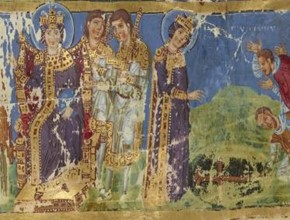
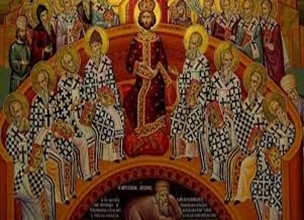
The Nicene Creed that was formulated in 325 A.D, originates from the Apostolic Creed that was first used as a baptismal formula by the first Christians, and celebrates being most the most confessed credal formulation after 1700 years by of being confessed by most Christians from all over the world. Although, the final version of the Creed was accepted in 381 at Constantinople, that led to its description as the Nicene-Constantinopolitan Creed, the gathering called by Ceasar Constantine, the first Christian Emperor, to unite Christians in the Roman Empire, and to get a common confession among them. It was a first attempt to reach consensus in the church through an assembly that represent all Christendom and affirm their faith in the Triune God. It was a call to unity in a troubled, unequal and divided context.
Today this relationship between church and state is interpreted in various ways, but more on that and other details from the creed relevant to our global and local (glocal) context is a story for another day. Our focus in this article is more on the celebration of this prestigious occasion, its meaning for our ecumenical relationships glocally, and possible ways in which we can celebrate this together as an ecumenical church in South Africa.
The name “Faith and Order” refers to two areas in which remaining disagreements prevent communion or unity among Christian Churches, with ‘faith” referring to what churches believe, seeking unity in agreement with such matters, to have common life among churches. The term ‘order’ refers to how the ministry of the church is organized as it serves to communicate God’s salvation in Christ, addressing disagreements that prevent communion among churches.
The Commission on Faith and Order undertakes theological studies so that the church may reach sufficient agreement across their diversity and grow in mutual care and accountability. In doing so, churches are persistent in their belief that the church of Jesus Christ is not many ‘churches’ but One Church. The key functions of the Commission is thus theological study, ecumenical unity, mutual accountability, and one church vision.
The first Commission on Faith and Order, known as the Faith and Order Movement, was held in the United States of America in 1910 and was mostly representative of churches from the Episcopalian (Anglican) and the Reformed (Presbyterian) traditions. The movement held two world conferences, the First World Conference in 1927 (Lausanne, Switzerland) with delegates from the Protestant, Anglican, Old Catholic, and Orthodox traditions, and the Second World Conference in 1937 (Edinburgh, Scotland), and became the Commission on Faith and Order of the World Council of Churches in 1948 in Amsterdam. The Third World Conference was held in Lund, Sweden in 1952, followed by the Fourth World Conference in Montreal in 1963. The Montreal Conference was a watershed moment, for the first time Roman Catholic and Pentecostal delegates were present. It was also a watershed moment for churches from the so-called “Third World” countries. The Fifth World Conference was held in Santiago de Compostela, Spain in 1993 with the theme “Towards Koinonia in Faith, Life and Witness.”
The Sixth World Conference is taking place in Egypt in 2025 and coincides with the celebration of the 1700 years confession of the Nicene Creed. Before we Let us turn into discussing this prestigious event, let us first clarify the South African involvement in the current Faith and Order Commission. The current Commission on Faith and Order was established in April 2023, and their term stretches from 2023 to 2030, with their first in-person gathering that was held in Indonesia (2024). There are three South Africans in the Commission, with Dr Nadia Marais (Dutch Reformed Church, SA) and Dr Daniel Andrew (Apostolic Faith Mission of South Africa) as members, and prof Henco van Der Westhuizen as consultant.
The Conference will bring together leaders and theologians from different traditions and a new generation of ecumenists, under the theme stated earlier in the article, “Where now for visible unity?” from the interconnected vantage points of faith, mission and unity.” The anniversary offers an opportunity to celebrate and reflect on the affirmation of faith in the Nicene Creed, the mission of God’s Triune love and its implications for the common witness and service of the church, offering us opportunities to think together what it means for us today. In a world characterized by climate catastrophe, pandemic, genocide, political instability, war, and economic concerns, a fresh engagement on these challenges by the ecumenical church can bring them together around interrelated perspectives of faith, mission, and unity. The vision of the World Council of Churches to bring churches to visible unity, and advancing the unity of humanity and creation.
The Commission identified three themes that was allocated to three study groups, SG1: Being Church on the way to Visible Unity; SG2: Being Human: Discerning Humanity in the Image of God; and SG3: Being Church in and for the World. The conversations will be around these three broad themes, with faith, unity and mission running through it like a golden thread. The distinctive task of the Commission is to invite churches to speak and listen to one another, and the Conference will explore what it means to live the apostolic faith together today and summon each other to visible unity. Just like Nicaea, the Conference draw together faith and contemporary thought, addressing questions such as discipleship practices that emanates from association with imperial powers. The “broadening of the table for conversation” is to include perspective from all regions, church traditions, and forms of being the church, not to join the WCC or the Faith and Order but to create a space for interaction and listening to each other.
The last question I would like to address is about the relevance of the Nicaea conference for faith, unity and mission in our South African context. How do we live out the apostolic faith in visible way as churches in South Africa. We live a country and a world that is becoming more and divisive and oppressive to the “other,” our contexts are not very much less different given the inequalities that people still experience and dehumanizing practices that destroy the dignity of our fellow human beings and the destruction of the environment. Confessing Nicaea anew, should bring as in direct conversation with each other over the denominational lines, about sharing Gods love for the world and working towards peace, justice and the integrity of creation.
I would like to pose some questions for a broadenedtable of conversation, does our fellowship with each other reflects the love and compassion of Christ and how is that love translated to respect and appreciation for our unity in diversity? How do we practice our unity that the world may know, whose we are? Is our faith and unity express the mission of divine love found in the triune God (mission Dei). Instead of providing answers, I rather raise questions for conversation about what it means to be a compassionate presence in the world. Where do we stand as a church in a politically hostile world, where the lack of ethical leadership and a moral compass lead to the further impoverishment of our fellow human beings? How do we respond to systems and structures that bring violence and abuse to the most vulnerable in society?
May Nicaea and the faith we confess with so many other Christians from all over the world inspire us not to build walls of doctrinal purity but rather bridges of a common faith, unity and mission. So that the world may know we are truly followers of Jesus Christ.
| Provided: Dr Daniel Andrew, Department Practical and Missional Theology, UFS and who also serves on a committee of the World Council of Churches.

